

All Authors

October 7, 2026 • 6 Minute Read
Christ in You, the Hope of Glory: What Colossians 1:27 Means for Your Life
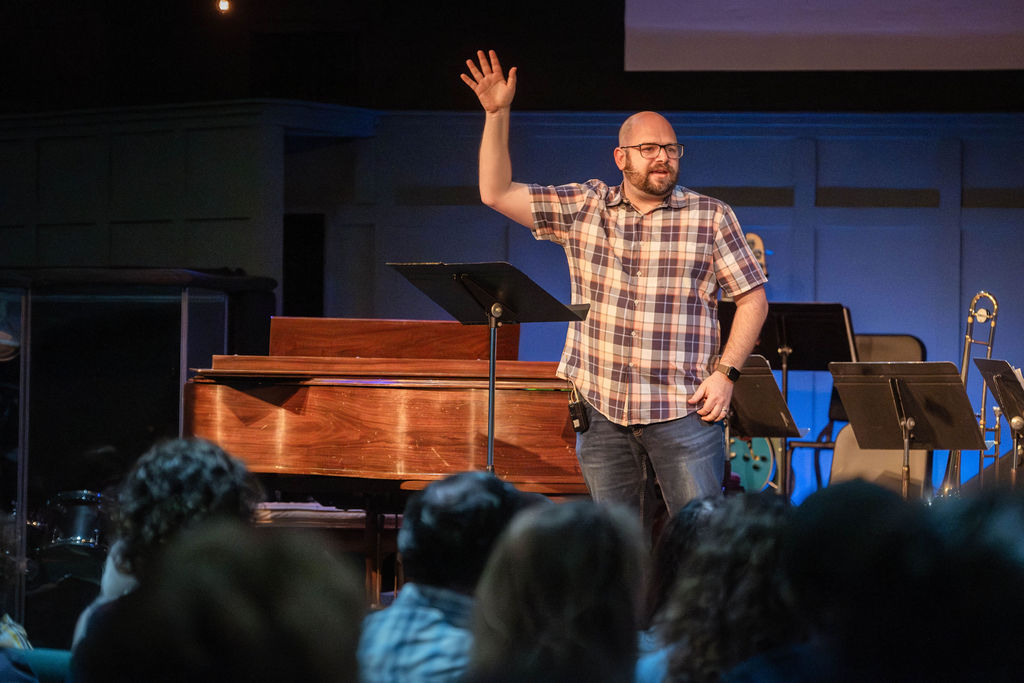
This past Sunday, Pastor Edward continued our series through Colossians with a message from Colossians 1:24–2:5. One phrase sat at the center of much of what he shared:
“Christ in you, the hope of glory.” Colossians 1:27 The mystery revealed Edward began by talking about secrets. There’s something about hearing, “I want to tell you a secret,” that immediately makes us lean in. But Paul is talking about a mystery God no longer intends to keep hidden. For generations, God had been unfolding His plan of rescue. Now something once hidden had been made clear: through Jesus, people from every nation could belong to God, and Christ would dwell in His people. That is the mystery Paul is celebrating: “Christ in you.” I appreciated how Edward slowed down and helped us think about how big that statement really is. Christianity is not simply believing certain things about Jesus from a distance. Jesus has given His Holy Spirit to everyone who trusts in Him. So when Paul speaks about “Christ in you,” he is talking about the real presence of God with His people by His Spirit. Christ is with you That means you are not alone. Edward talked about those moments when life gets dark, when pain becomes real, or when God can feel far away. Maybe it is a hospital room. Maybe it is the middle of the night when your mind will not slow down. Maybe it is grief or disappointment that feels hard to explain to anyone else. Those are the moments we especially need to remember that Christ’s presence does not depend on our feelings. Jesus told His disciples, “I will not leave you as orphans.” Paul says elsewhere that the Spirit of God lives in those who belong to Christ. “Christ in you” is not simply a comforting thought. It is part of what it means to belong to Jesus. Sitting at the table But Paul does not stop with Christ’s presence. In the very next verse, he says his goal is to see people become “mature in Christ.” Christ does not simply comfort us. He changes us. One of the images from the sermon that stuck with me was a table with two chairs. Imagine God sitting on one side and you sitting on the other. The point of the meeting is your transformation into the likeness of Jesus. What does God bring to the table? Everything we cannot produce ourselves: grace, love, the power to change us. Even the desire to follow Him is something He is at work producing in us. What do we bring? We come honestly. We bring our weakness, our sin, our questions, and our willingness to respond to what God is doing. Edward’s challenge was that many of us spend a lot of time running around the table without actually sitting down. We stay busy. We rush through prayer. We move from one responsibility to another. We may even spend a lot of time doing Christian things without slowing down long enough to be with God in prayer, hear Him through Scripture, confess what needs to be confessed, and respond to what He is showing us. For some of us, “sitting at the table” this week may simply mean slowing down long enough to pray honestly, open Scripture without rushing, and pay attention to what God is teaching us. That connects with something Paul says in this same passage: “I labor for this, striving with his strength that works powerfully in me.” Colossians 1:29 Paul works hard, but he knows the power behind the work is not his own. That is an important distinction in the Christian life. Spiritual growth is not passive. We really do obey, turn from sin, learn, and make different choices. But we cannot make ourselves more like Jesus by sheer effort. God is the one at work in us. Paul goes on in chapter 2 to say that he wants these believers strengthened, joined together in love, and settled in their understanding of Christ. He also wants them protected from arguments that sound convincing but are not true. In other words, growing as a Christian is not simply about knowing more information. It means becoming more grounded in what is true, more shaped by love, and less easily moved by whatever sounds persuasive in the moment. The hope of glory Edward also spent time on the last part of Paul’s phrase: “the hope of glory.” He used the famous painting The Raft of the Medusa to picture the difference hope can make. The painting shows shipwreck survivors stranded at sea. Some have collapsed. Some seem to have given up. But others are still looking toward the horizon, waving toward a ship in the distance. They still believe rescue may be coming. There are plenty of reasons people lose hope. Sometimes we give up on relationships, dreams, callings, or even our own ability to change. But Christians have a reason to keep lifting our heads. Our hope is not that everything in this life will eventually turn out the way we want. It is not that we will finally get ourselves together. Our hope is Christ. When Paul talks about “glory,” he is looking ahead to the future God has promised: the day when Christ returns, His work in us is complete, and we are with Him forever. The Christ who is present with us now is also the Christ who will bring us into that future. That was one of the things I appreciated most about Edward’s message. “Christ in you” speaks to where we are right now and where God is taking us. His presence means we are not abandoned. His power means transformation does not finally depend on us. And His promise gives us hope when life feels uncertain. Edward unpacked all of this with stories and illustrations I cannot capture here, so I’d encourage you to hear the whole message for yourself. And if you do, take a few quiet minutes afterward and ask God one simple question: Where have I been running around the table instead of sitting with You? Christ in you, the hope of glory. Watch Pastor Edward’s Sermon:

September 28, 2026 • 5 Minute Read
Jesus Is Supreme Over Everything: Message Reflection on Colossians 1:15–23
Many of us have heard the advice, “Put Jesus first.” It sounds right. We picture a list of priorities: family, work, money, relationships, the future. Then we move Jesus to the top and assume everything else will fall into place. But this past Sunday, as we continued through Colossians 1:15–23, we saw that Paul is saying something much bigger than that. Jesus does not simply belong at the top of the list. The whole list exists for Him. When “Jesus First” Isn’t Enough Usually when we say “put Jesus first,” we mean things like reading the Bible, praying, going to church, serving, and making time for God. Those are all good things. The problem is that we can still treat them as the religious part of life while everything else stays in its own box. Jesus can be “first” and still have very little to do with how we work, how we spend money, how we treat our family, what we do in private, or how we engage politics. A story about A. W. Tozer has always made that tension feel especially real to me. Tozer was an Alliance pastor and writer whose books have helped generations of Christians take God seriously. After his death, his wife Ada remarried. She is reported to have said of her second husband, “Aiden loved Jesus Christ, but Leonard Odam loves me.” We do not know everything about their marriage, and it would be unfair to reduce Tozer’s life to one quote. But the story names a tension some people raised in deeply religious homes know well: God and church seemed to get the best, while the people closest to them got what was left. The point is not really Tozer. It is how easily any of us can give Jesus our religious activity without letting His lordship shape the rest of our lives. Paul gives us a much bigger picture. Who Jesus Actually Is Paul begins with who Jesus is: “He is the image of the invisible God, the firstborn over all creation.”
Colossians 1:15 God is invisible. Paul says that if you want to know what God is like, look at Jesus. He also calls Jesus “the firstborn over all creation.” That does not mean Jesus was the first thing God created. The church had to confront that claim directly, and at the Council of Nicaea in AD 325 confessed that the Son is “begotten, not made.” In plain language, Christians have historically understood Jesus to be eternally God the Son. He is not a created being. He is Lord over creation. And when Christians call Jesus “Lord,” we mean more than that He is important to us. We mean He has rightful authority over us. Everything Exists for Him Paul keeps going: “For everything was created by him, in heaven and on earth, the visible and the invisible… all things have been created through him and for him.”
Colossians 1:16 That changes the way we think about the Christian life. If everything was created through Jesus and for Jesus, then there is no part of ordinary life that sits outside His authority or purpose. Our work, our families, our money, our relationships, our ambitions, and our plans for the future all belong under His lordship. Paul adds that Jesus is “before all things, and by him all things hold together.” Jesus is not one important part of life competing with all the other important parts. He is the One who holds it all together. That is much bigger than putting Jesus first. Supreme Over the Church Then Paul says Jesus is “the head of the body, the church.” In other words, Jesus is the church’s ruler and source of life. That matters because churches can become very focused on personalities, programs, preferences, traditions, or leaders. But the church does not belong to a pastor, a board, or even the congregation. It belongs to Jesus. So the question is not simply, “What kind of church do we want?” A better question is, “What does Jesus want His church to be?” The One Who Reconciles Us What makes this passage even more striking is that the supreme Christ Paul describes is also the One who came near to rescue us. Paul says that through Jesus, God reconciled all things to Himself, “making peace through his blood, shed on the cross.” Then he makes it personal. We were once alienated from God, but through Christ’s death we have been reconciled. To be reconciled means that a broken relationship has been restored. The One through whom everything was created is also the One who gave Himself to bring us back to God. His supremacy is not cold or distant. We see what kind of King Jesus is at the cross. What Does That Change? Maybe “put Jesus first” is too small a way to say it. Paul’s vision is bigger. Jesus is Lord over the whole thing. So instead of only asking, “How do I put Jesus first here?” maybe the better question is, “What does it mean that this already belongs to Jesus?” What would it mean for my family to belong to Him? My work? My money? My political convictions? My private habits? My plans for the future? That is a bigger question than where Jesus ranks on a list of priorities. Jesus is not simply first among many important things. He is supreme over everything. Watch the sermon:

September 21, 2026 • 7 Minute Read
How Does the Gospel Actually Change Your Life? | Colossians 1:1–14
This past Sunday we began our new series through Colossians with a question most Christians eventually have to face: How does the gospel actually change your life? Paul is writing to a church in Colossae, a city in what is now Turkey. These were ordinary people who had heard the good news about Jesus, trusted Him, and begun following Him. Paul is encouraged by what he has heard. Their faith is real. Their love for other Christians is real. Their lives are changing. But Paul does not say, “Great. You’re done.” A few verses later, he begins praying that they will keep growing. Changed, and still changing That tension feels familiar to me. There are parts of my life where I can look back and thank God for how much He has changed me. Then He shows me another part and I think, Ugh. I’m still a mess. Sometimes growth means seeing how much God has changed you. Sometimes it means finally seeing what still needs changing. That can be especially frustrating when you already know what Jesus wants. You know you should be patient with your kids. Then it is 7:42 in the morning, nobody can find their shoes, something has spilled, and you are already late. Suddenly all your Bible knowledge about patience seems to disappear. You know getting louder probably will not help anybody find their shoes. You know you should not snap at them. But you do it anyway. That same gap can show up in more private places too. Anger. Bitterness. Pornography. The way you speak when you are hurt. Some habit you genuinely want to leave behind but keep returning to. After a while the question gets bigger than, “How do I stop?” It becomes, “If I really belong to Jesus, why am I still struggling with this?” Paul’s letter gives us an important answer right away: real faith does not mean you are finished growing. The question is how that growth actually happens. Knowing more and trying harder Two of the most common places we start are knowledge and effort. Maybe I need to know more. Maybe I need another Bible study or somebody to explain this better. Sometimes we do need to know more. Paul prays that the Colossians would be “filled with the knowledge of his will in all wisdom and spiritual understanding” (Colossians 1:9). He is not mainly talking about discovering a secret plan for which job to take, where to live, or who to marry. He wants them to know God and understand how He wants His people to live. Paul also wants that knowledge to show up in their lives. He prays that they will “walk worthy of the Lord” and bear fruit in every good work. So knowing matters. Obedience matters. But trouble starts when we assume that once God tells us what to do, the rest is up to us. God gives me the instructions. I supply the power. Most of us would never say it that way, but we can easily live that way. When we fail, instead of depending on God more, we make a bigger promise to ourselves: I’ll get serious. I’ll be more disciplined. Next time I’ll do better. Then Paul prays something interesting: “being strengthened with all power, according to his glorious might, so that you may have great endurance and patience…”
Colossians 1:11 Paul expects even ordinary Christian faithfulness to require strength God supplies. Endurance when something is hard. Patience with somebody who gets on your nerves. The ability to keep thanking God when life is not going the way you hoped. Apparently, we need God’s power for some very ordinary parts of following Jesus. We really do have to obey. But God never asked us to be the power source for our own transformation. Start with what God has already done So where does real change begin? Paul has already given us a clue. In verse 6, he says the gospel is “bearing fruit and growing” among them. Then in verse 10, he prays that these Christians themselves will bear fruit and grow. Before Paul talks about their fruit, he talks about the gospel taking root among them. That matters because we tend to begin with ourselves: What do I need to do? What do I need to fix? Paul takes us back to what God has already done. The gospel does not begin with advice about how to improve yourself. It begins with good news about what God has done through Jesus. Paul says the Father has given His people an inheritance. Think family. An inheritance is not something you earn; it is something you receive because you belong. Then he says God has “rescued us from the domain of darkness and transferred us into the kingdom of the Son he loves” (Colossians 1:13). Rescue is stronger than help. You need rescue when you cannot get yourself to safety. Paul is not describing people who needed a little spiritual assistance. We were separated from God, trapped under the power of sin, and unable to make ourselves right with Him. And God rescued us. He did not merely bring us out of something. He brought us into the kingdom of Jesus. Sin is no longer our king. Jesus is. Then Paul says, “In him we have redemption, the forgiveness of sins” (v. 14). The things we have done against God, the things we wish we could undo, even the things we knew were wrong and did anyway, are not dealt with by trying harder. We needed forgiveness. And in Jesus there is forgiveness. The Father Paul trusts to strengthen these Christians is the same Father who rescued them in the first place. That is the connection. God’s grace does not stop when you first trust Jesus. The Father who rescued you has not left you to follow Jesus in your own strength. What dependence looks like Depending on God does not mean doing nothing. Paul still wants these Christians to know God’s will. He still wants them to obey. He still expects their lives to bear fruit. Dependence means doing what God calls you to do while trusting Him for what you cannot supply yourself. Maybe there is already one place in your life where you know what obedience looks like, but growth has been hard. Instead of beginning with another promise that this week you are finally going to fix yourself, begin with what God has already done. You might pray, Father, You rescued me. You brought me into the kingdom of Jesus. In Him, I have forgiveness. Show me what faithfulness looks like here. Strengthen me so I can obey You. Then take the next faithful step. Apologize. Tell the truth. Forgive again. Turn off the screen. Ask another Christian to pray with you. Sometimes dependence really is that simple: a weak prayer, an honest confession, and the next faithful step. You are not the power source for the Christian life. The Father who rescued you is the Father who will keep strengthening you. If you missed the message, I’d encourage you to watch “How Does the Gospel Actually Change Your Life?” from Colossians 1:1–14 and spend some time with Paul’s prayer for these Christians. The gospel keeps bearing fruit as God reshapes what we know, how we live, and what we trust. Watch the full message:

Copyright 2026 Community Alliance Church
All Rights Reserved.