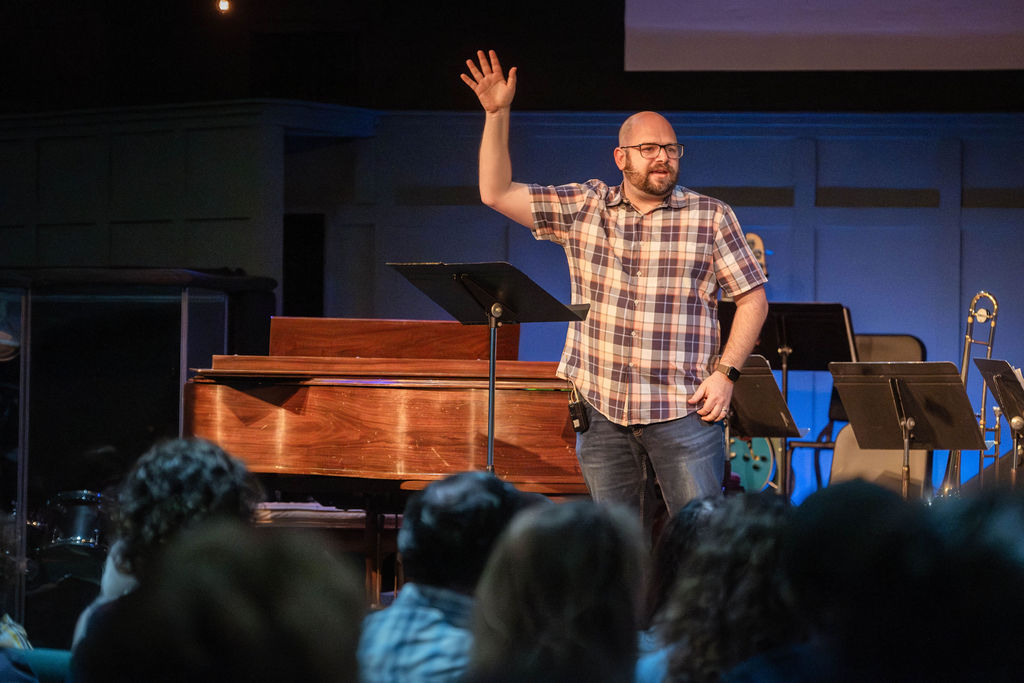
This past Sunday we began our new series through Colossians with a question most Christians eventually have to face: How does the gospel actually change your life?
Paul is writing to a church in Colossae, a city in what is now Turkey. These were ordinary people who had heard the good news about Jesus, trusted Him, and begun following Him. Paul is encouraged by what he has heard. Their faith is real. Their love for other Christians is real. Their lives are changing.
But Paul does not say, “Great. You’re done.” A few verses later, he begins praying that they will keep growing.
Changed, and still changing
That tension feels familiar to me. There are parts of my life where I can look back and thank God for how much He has changed me. Then He shows me another part and I think, Ugh. I’m still a mess.
Sometimes growth means seeing how much God has changed you. Sometimes it means finally seeing what still needs changing. That can be especially frustrating when you already know what Jesus wants.
You know you should be patient with your kids. Then it is 7:42 in the morning, nobody can find their shoes, something has spilled, and you are already late. Suddenly all your Bible knowledge about patience seems to disappear. You know getting louder probably will not help anybody find their shoes. You know you should not snap at them. But you do it anyway.
That same gap can show up in more private places too. Anger. Bitterness. Pornography. The way you speak when you are hurt. Some habit you genuinely want to leave behind but keep returning to.
After a while the question gets bigger than, “How do I stop?” It becomes, “If I really belong to Jesus, why am I still struggling with this?”
Paul’s letter gives us an important answer right away: real faith does not mean you are finished growing. The question is how that growth actually happens.
Knowing more and trying harder
Two of the most common places we start are knowledge and effort. Maybe I need to know more. Maybe I need another Bible study or somebody to explain this better.
Sometimes we do need to know more. Paul prays that the Colossians would be “filled with the knowledge of his will in all wisdom and spiritual understanding” (Colossians 1:9). He is not mainly talking about discovering a secret plan for which job to take, where to live, or who to marry. He wants them to know God and understand how He wants His people to live.
Paul also wants that knowledge to show up in their lives. He prays that they will “walk worthy of the Lord” and bear fruit in every good work. So knowing matters. Obedience matters.
But trouble starts when we assume that once God tells us what to do, the rest is up to us. God gives me the instructions. I supply the power.
Most of us would never say it that way, but we can easily live that way. When we fail, instead of depending on God more, we make a bigger promise to ourselves: I’ll get serious. I’ll be more disciplined. Next time I’ll do better.
Then Paul prays something interesting:
“being strengthened with all power, according to his glorious might, so that you may have great endurance and patience…”
Colossians 1:11
Paul expects even ordinary Christian faithfulness to require strength God supplies. Endurance when something is hard. Patience with somebody who gets on your nerves. The ability to keep thanking God when life is not going the way you hoped.
Apparently, we need God’s power for some very ordinary parts of following Jesus.
We really do have to obey. But God never asked us to be the power source for our own transformation.
Start with what God has already done
So where does real change begin?
Paul has already given us a clue. In verse 6, he says the gospel is “bearing fruit and growing” among them. Then in verse 10, he prays that these Christians themselves will bear fruit and grow.
Before Paul talks about their fruit, he talks about the gospel taking root among them. That matters because we tend to begin with ourselves: What do I need to do? What do I need to fix?
Paul takes us back to what God has already done.
The gospel does not begin with advice about how to improve yourself. It begins with good news about what God has done through Jesus.
Paul says the Father has given His people an inheritance. Think family. An inheritance is not something you earn; it is something you receive because you belong.
Then he says God has “rescued us from the domain of darkness and transferred us into the kingdom of the Son he loves” (Colossians 1:13). Rescue is stronger than help. You need rescue when you cannot get yourself to safety.
Paul is not describing people who needed a little spiritual assistance. We were separated from God, trapped under the power of sin, and unable to make ourselves right with Him. And God rescued us.
He did not merely bring us out of something. He brought us into the kingdom of Jesus. Sin is no longer our king. Jesus is.
Then Paul says, “In him we have redemption, the forgiveness of sins” (v. 14). The things we have done against God, the things we wish we could undo, even the things we knew were wrong and did anyway, are not dealt with by trying harder.
We needed forgiveness. And in Jesus there is forgiveness.
The Father Paul trusts to strengthen these Christians is the same Father who rescued them in the first place. That is the connection.
God’s grace does not stop when you first trust Jesus. The Father who rescued you has not left you to follow Jesus in your own strength.
What dependence looks like
Depending on God does not mean doing nothing. Paul still wants these Christians to know God’s will. He still wants them to obey. He still expects their lives to bear fruit.
Dependence means doing what God calls you to do while trusting Him for what you cannot supply yourself.
Maybe there is already one place in your life where you know what obedience looks like, but growth has been hard. Instead of beginning with another promise that this week you are finally going to fix yourself, begin with what God has already done.
You might pray, Father, You rescued me. You brought me into the kingdom of Jesus. In Him, I have forgiveness. Show me what faithfulness looks like here. Strengthen me so I can obey You.
Then take the next faithful step. Apologize. Tell the truth. Forgive again. Turn off the screen. Ask another Christian to pray with you.
Sometimes dependence really is that simple: a weak prayer, an honest confession, and the next faithful step.
You are not the power source for the Christian life. The Father who rescued you is the Father who will keep strengthening you.
If you missed the message, I’d encourage you to watch “How Does the Gospel Actually Change Your Life?” from Colossians 1:1–14 and spend some time with Paul’s prayer for these Christians.
The gospel keeps bearing fruit as God reshapes what we know, how we live, and what we trust.